
Miguel
Salvadoran, and the reason there is anything to roast. He owns Valle de Oro and grew up around it — the flat ground in Sonsonate, the replanting, the trees. Everything that happens before the coffee leaves the country is his.
Miguel grows it in El Salvador. Joanna roasts it. One coffee — chocolate and orange.
Flavor profile
El Salvador · Natural · 1,050 masl · Marsellesa · 250g
“A very clean natural — chocolate and orange, almost none of the funk the process is known for.”
Every bag has a QR code on the back. Scan it, or type the address below, and write down what you actually got — not what you think you should have got. We read all of it. When we roast this lot again, your words are part of what we are aiming at.
mestizo.roasters/notes2007
The year we bet the whole farm.
That year the farm pulled out its Pacas and Pacamaras and replanted all twenty-one cultivated hectares with Marsellesa. At the time, specialty did not take the variety seriously. It was a hybrid, and hybrids were understood to be for yield, not for cup.
We did it because rust and a changing climate were coming and we could already see them. The seed came direct from ECOM CRIAD in Nicaragua. Then a decade of selection in our own nursery, keeping only what cupped well and yielded well and throwing out the rest. The industry came around years later.
The farm is unusually flat for El Salvador, which quietly makes everything easier — picking, moving cherry, keeping the drying beds true. The soil is volcanic Andisol. We use no herbicides and no pesticides at all, and the shade is managed rather than left to itself: roughly forty per cent shade to sixty per cent sun, adjusted as the trees fill in.
The agronomy is not ours. It is run by Don Julio of Lean Coffee Management, and has been for years. He decides what the trees need and when. We are lucky to have him, and we would rather say so plainly than take credit for his work.
The drying log
At the start, three times a day — morning, noon, afternoon — just to turn the coffee for an even dry. No numbers yet. As it nears the end, that becomes an hourly check on the coffee mass's own temperature, plus three humidity readings a day. Dull work, and the only reason we can repeat a lot a year later instead of hoping for it.
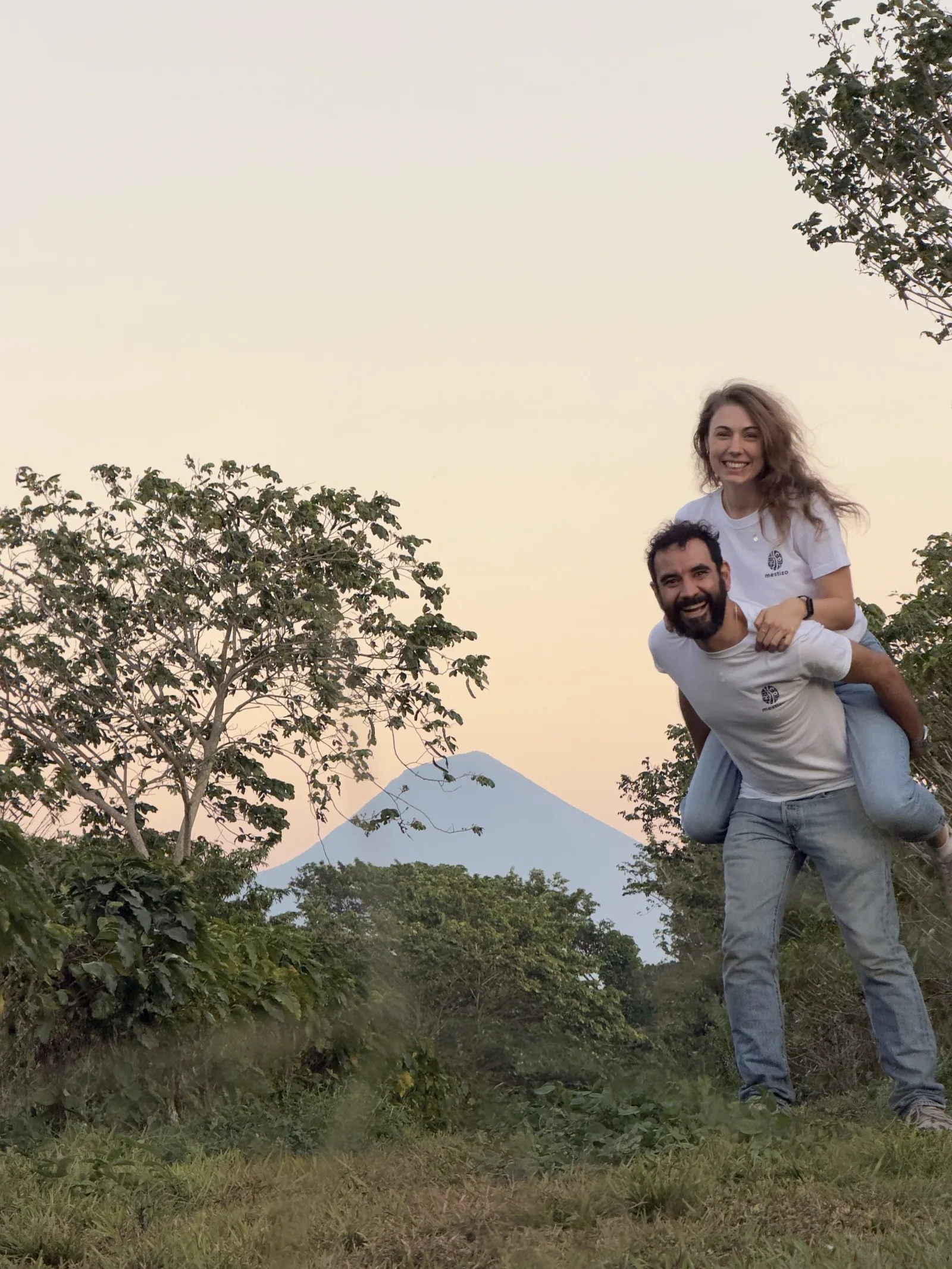
Salvadoran, and the reason there is anything to roast. He owns Valle de Oro and grew up around it — the flat ground in Sonsonate, the replanting, the trees. Everything that happens before the coffee leaves the country is his.
Polish, an engineer first and a roaster second, which we think is the right order. She spent years at Ikawa. She treats a roast the way an engineer treats anything — measure it, write it down, do it again on purpose. How this coffee tastes once it is in the drum is hers.
two heritages,
one
bean
One coffee. Valle de Oro Natural, 250g, roasted 21 June 2026. There is no shop here yet — ask us for a bag and we will sort it out like people.